The rapid acceleration of the cryptocurrency ecosystem has invited not only innovation but also a surge in deception. As digital assets continue to captivate investors worldwide, fake crypto exchanges have proliferated, presenting convincing facades yet posing substantial threats to users. These fraudulent platforms excel at mimicking established names like Binance and Coinbase, leveraging sleek interfaces and promises of extraordinary gains to entrap unsuspecting investors. With losses from crypto-related fraud surpassing $1 billion in recent years, understanding how to detect and avoid these scams has never been more vital. This analysis delves into the critical indicators of illegitimate exchanges, furnishing investors with practical knowledge to safeguard their assets in a market that remains as rewarding as it is risky.
Key points to remember: Fake exchanges often guarantee unrealistic profits and lack regulatory oversight. Identifying deficient customer support, incomplete transparency, and suspicious jurisdictions provides early warning signs. Genuine platforms enforce strict KYC/AML procedures and maintain security through audits. Staying vigilant about withdrawal fees and social media authenticity can prevent falling victim to manipulation. Utilizing reputable services such as Kraken, Gemini, and Crypto.com alongside investigative tools enhances protection against fraud.
Recognizing Unrealistic Promises and Guarantees in Crypto Platforms
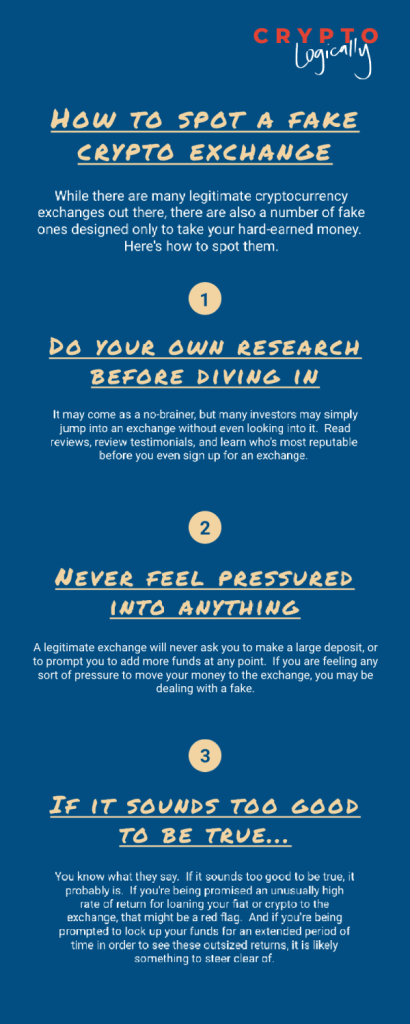
One of the most glaring signals of fraudulent activity within a crypto exchange is the allure of guaranteed or abnormally high returns. Legitimate investments inherently carry risk, and no reputable platform, including major players like Bitstamp or Blockchain.com, can assure consistent profits without volatility. Numerous scams emulate this illusory promise; BitConnect is a notorious example that collapsed after assuring users of daily returns exceeding 1%. Investors should remain wary of claims exceeding 20% annual returns, as sustainable crypto projects do not operate on such guarantees. The emphasis must be placed on transparency and credible financial performance rather than attritional marketing tactics.

Examining Website Integrity and Customer Support as Trust Indicators
Another important aspect to investigate is the quality and professionalism displayed by the platform’s website and its customer support. Fraudulent exchanges often exhibit broken links, spelling errors, and evasive contact information often limited to generic email addresses or P.O. boxes. In contrast, trustworthy platforms like Huobi and OKX provide reliable support channels, physical office details, and seamless user experience bolstered by SSL encryption. User reviews found on trusted online communities and resources, such as forums or Exchange Scout’s scam prevention articles, act as useful benchmarks to assess legitimacy.
Importance of Transparency and Regulatory Compliance in Avoiding Fake Exchanges
Absence of transparency in revealing management teams, compliance with regulatory frameworks, and clear business models stands out as a red flag for fake exchanges. While platforms like Coinbase and Gemini openly display team bios, past audits, and employ rigorous measures to prevent money laundering through KYC procedures, rogue exchanges frequently rely on pseudonymous operators and obscure wallet addresses. A legitimate platform’s commitment to regulatory oversight – often through licenses from authorities like FinCEN or ASIC – reassures users of operational authenticity. Investors should cross-reference registration information on official sites before engaging financially.
Recognizing Pressure Tactics and Urgency as Scam Indicators
Legitimate exchanges do not rush customers into hasty decisions. Fake platforms employ urgency tactics, urging immediate deposit to secure “exclusive VIP plans” or capitalize on fleeting “limited opportunities.” This high-pressure approach is designed to bypass rational evaluation and due diligence. Reputable platforms like Kraken operate with a steady and transparent onboarding process, allowing investors to make informed choices without inducements. Patience, combined with thorough research, remains essential in resisting these manipulative tactics.
The Role of Jurisdiction and Licensing in Ensuring Exchange Legitimacy
The jurisdiction where a platform is registered can provide critical clues about its legitimacy. Exchanges operating in countries with lenient regulations or no enforcement, such as certain offshore locales, may deliberately avoid oversight to conduct fraudulent activities. In contrast, globally recognized exchanges—such as Bitfinex or Crypto.com—comply with stringent guidelines and maintain transparent licensing. Verifying the presence of licenses issued by reputable regulators like MAS or FCA is a powerful step toward fraud prevention. Investors must remain cautious about platforms lacking clear jurisdictional disclosure or operating under suspicious legal entities.
Significance of KYC/AML Compliance in Authentic Cryptocurrency Platforms
Know-Your-Customer (KYC) and Anti-Money Laundering (AML) procedures form the backbone of trustworthy cryptocurrency exchanges. Platforms bypassing these essential checks typically indicate fraudulent intent, aiming to prevent traceability. For example, established exchanges such as Gemini and Binance enforce rigorous identification verification, ensuring adherence to international compliance standards. Conversely, platforms allowing anonymous sign-ups or disregarding KYC requirements pose severe risks to investor security. Understanding these compliance protocols helps investors filter legitimate trading venues from potential traps.
Observing Token Authenticity and Fee Structures to Detect Fraudulent Operations
Fake exchanges commonly promote obscure or newly created tokens—known as “ghost tokens”—without substantive use cases, inflating their value to lure uninformed buyers. Trusted platforms only list cryptocurrencies verified on data aggregation sites like CoinMarketCap or CoinGecko and provide clear token histories. Additionally, exorbitant withdrawal or activation fees, sometimes exceeding 10%, serve as typical ploys for draining investor funds. Legitimate services maintain transparent, competitive fee structures, often below 2%. Consumers should thoroughly examine fee disclosures to avoid hidden charges engineered to exploit them.
Verifying Social Media Presence and Third-Party Audits as Indicators of Platform Credibility
In the age of digital connectivity, fake exchanges manipulate social media to fabricate popularity through bots and artificial testimonial spikes. Genuine exchanges maintain consistent, authentic engagement and respond proactively to community concerns. Moreover, refusal to deliver independent audits from firms like CertiK or SlowMist often signals technical and financial opacity. Verified publication of third-party audits on platforms or dedicated blockchain explorers underscores an exchange’s commitment to transparency, reducing suspicion about possible Ponzi schemes or manipulated trading volumes.