Liquidity remains a cornerstone of successful trading across various crypto exchanges in 2025, where the dynamism of cryptocurrency markets demands nuanced understanding. As investors evaluate platforms like Binance, Coinbase, and others, liquidity determines not just the ease of buying or selling assets but profoundly impacts price stability and trade execution speed. Navigating this landscape, traders must consider how liquidity is shaped by trading volume, asset pairs, and the number of market participants, along with the differing mechanisms of centralised versus decentralised exchanges. This examination reveals why liquidity is pivotal to ensuring seamless transactions and minimizing risks in the face of market volatility.
In brief: Liquidity on crypto exchanges affects price stability and trade speed; centralised platforms such as Binance and Coinbase dominate major crypto trading volumes; decentralised exchanges like Uniswap excel in specific stablecoin liquidity; bid-ask spreads and slippage rates serve as indicators of liquidity health; external disruptions can abruptly impact liquidity; and leveraging tools helps traders evaluate exchange liquidity effectively.
Why Liquidity Is a Critical Metric on Crypto Exchanges
Liquidity reflects how effortlessly assets can be traded without causing drastic price shifts. On exchanges such as Binance and Coinbase, high liquidity facilitates nearly instantaneous trade execution, crucial in a market that operates 24/7 without centralized intermediaries. Traders benefit from stable pricing, enabling predictable strategy formulation that accounts for minimal slippage and tight spreads. In contrast, platforms with low liquidity, such as some smaller or less frequented exchanges, often experience slower trades, greater price volatility, and wider spreads, creating less favorable conditions for both retail and institutional investors. Thus, examining liquidity before selecting an exchange ensures smoother operations and effective capital deployment.

Impact of Liquidity on Price Stability and Trade Execution
An exchange’s liquidity directly influences bid-ask spreads—the gap between buying and selling prices—and slippage, the variance between intended and actual trade prices. Exchanges known for robust liquidity, such as Kraken and Gemini, manage to offer tight spreads, reducing hidden trading costs and creating an environment conducive to large-volume transactions. This is particularly vital when leveraging is involved; platforms like Bybit allow traders to control significant positions with limited capital, amplifying both profits and potential price impacts. Conversely, in low-liquidity contexts, even modest orders might trigger considerable price movements, undermining trade confidence and strategy fulfillment.
Differences in Liquidity Between Centralised and Decentralised Exchanges
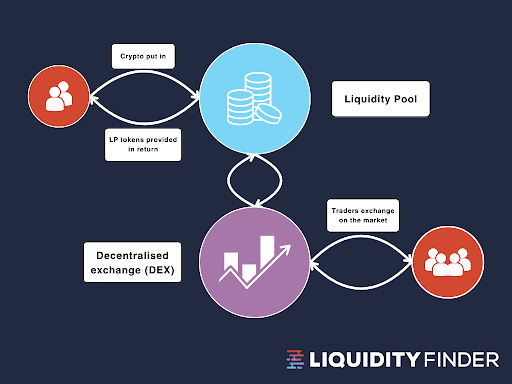
Centralised exchanges (CEXs) such as Huobi, OKX, and KuCoin have traditionally dominated crypto trading volumes due to their comprehensive order books, high market depth, and institutional participant presence. These features foster tighter bid-ask spreads and substantial trade volume, particularly for major cryptocurrencies like Bitcoin and Ethereum. Meanwhile, decentralised exchanges (DEXs), exemplified by platforms such as Uniswap, operate primarily with automated market makers rather than traditional order books. While DEXs promise enhanced decentralisation and permissionless access, the liquidity on these platforms remains fragmented and often concentrated around stablecoins like DAI.
Recent market analyses underscore that liquid crypto-to-crypto pairs on centralised venues maintain deeper liquidity pools allowing large trades with minimal slippage, whereas fiat-to-crypto pairs typically exhibit more shallow market depth. The advent of exchange-traded funds (ETFs) has further stimulated activity without supplanting spot trading dominance, underlining the complementary nature of these financial instruments on liquidity dynamics.
Market Disruptions and Liquidity Sensitivity
Liquidity in the crypto realm remains vulnerable to geopolitical events and cyber incidents. Notable examples, such as political unrest in South Korea or the Bybit cyberattack, illustrate how sudden external shocks can prompt liquidity contractions and dramatic price fluctuations. These episodes highlight the necessity for exchanges to maintain robust risk management and operational resilience. Traders often turn to liquidity tracking tools and platforms offering comprehensive market data, ensuring informed decisions amidst turbulent conditions.
Evaluating and Selecting Exchanges by Liquidity
Prospective traders should appraise trading volume and order book depth when choosing their preferred platforms. Exchanges like Binance, Coinbase, and Bitfinex provide transparent metrics exhibiting high liquidity, reflected in sustained user activity and diverse asset pairs. Additionally, subtle indicators—such as reduced bid-ask spreads and minimal slippage—signal healthy liquidity environments. Usage of specialised liquidity tracking tools, albeit often subscription-based, supplements this evaluation by delivering real-time data crucial for strategy calibration. Informed selection based on these criteria enhances trade efficiency and mitigates unexpected costs.