

Cryptocurrency taxation has become an increasingly pivotal issue as regulatory bodies worldwide sharpen their focus on digital assets. In 2025, the U.S. Internal Revenue Service (IRS) has intensified enforcement and introduced comprehensive reporting rules that underscore the necessity for crypto investors to fully understand their tax obligations. Unlike traditional assets, cryptocurrencies entail unique tax treatments that depend on intricate factors such as holding periods, types of transactions, and the nature of income derived from mining, staking, or airdrops. Given the IRS’s classification of cryptocurrencies as property, each disposal transaction—be it a sale, swap, or use for purchases—can trigger taxable events, mandating precise record-keeping and compliance. The federally mandated new Form 1099-DA compels brokers to report gross proceeds from digital asset sales, thereby elevating transparency and stamping a regulatory footprint on every trade or exchange. Practical navigation of these requirements often leads investors to rely on specialized tools like TokenTax, CoinTracker, and Koinly that integrate transaction data seamlessly, assisting with accurate capital gains computation and tax form preparation.
Short-term gains from cryptocurrencies held for a year or less are taxed as ordinary income with rates ranging widely from 10% to 37%, depending on one’s income level. Conversely, long-term holdings benefit from preferential capital gains rates of 0%, 15%, or 20%, providing substantive tax savings for investors who strategically manage disposition timing. Additional complexities emerge from gains classified under collectible income—such as certain NFTs—which incur up to a 28% tax rate. Meanwhile, income deriving from mining and staking activities must be reported at fair market value as ordinary income upon receipt, compounding the compliance burden. Optimizing tax liability also involves leveraging emerging strategies like tax loss harvesting, now more accessible due to the absence of a wash sale rule on cryptocurrencies.
Investor preparedness hinges on meticulous documentation, involving accurate cost basis tracking across multiple wallets and exchanges in line with evolving regulations like the Infrastructure Investment and Jobs Act. With global regulatory frameworks converging yet retaining jurisdiction-specific nuances, professional advisory remains indispensable for effective tax planning, underscored by the practical use of audit-ready portfolio tracking platforms such as ZenLedger and TaxBit. The evolving digital asset tax environment in 2025 reflects a decisive shift towards increased transparency, regulatory harmonization, and sophisticated compliance methodologies, marking a critical inflection point for digital asset holders to ensure adherence and optimize fiscal outcomes.
- Crypto gains are taxed based on holding period: short-term rates equal ordinary income taxes; long-term gains are taxed at reduced capital gains rates.
- The IRS treats cryptocurrency as property, making every sale, trade, or use a potentially taxable event.
- New broker reporting requirements under federal law mandate Form 1099-DA, increasing transparency and enforcement.
- Mining, staking, and airdrops qualify as ordinary income at fair market value upon receipt.
- Professional cryptocurrency tax software and expert advisory services are increasingly essential for accurate compliance and strategic tax management.
Understanding Crypto Taxation: Key Principles of Gains and Losses
Cryptocurrency taxation in 2025 marks a convergence of traditional capital gains tax principles with the unique characteristics of digital assets. The IRS’s treatment of cryptocurrencies as property means that each transaction—for example, selling Bitcoin or exchanging Ethereum for another crypto—constitutes a taxable event that requires careful gain or loss calculation based on the asset’s cost basis and fair market value at disposal.
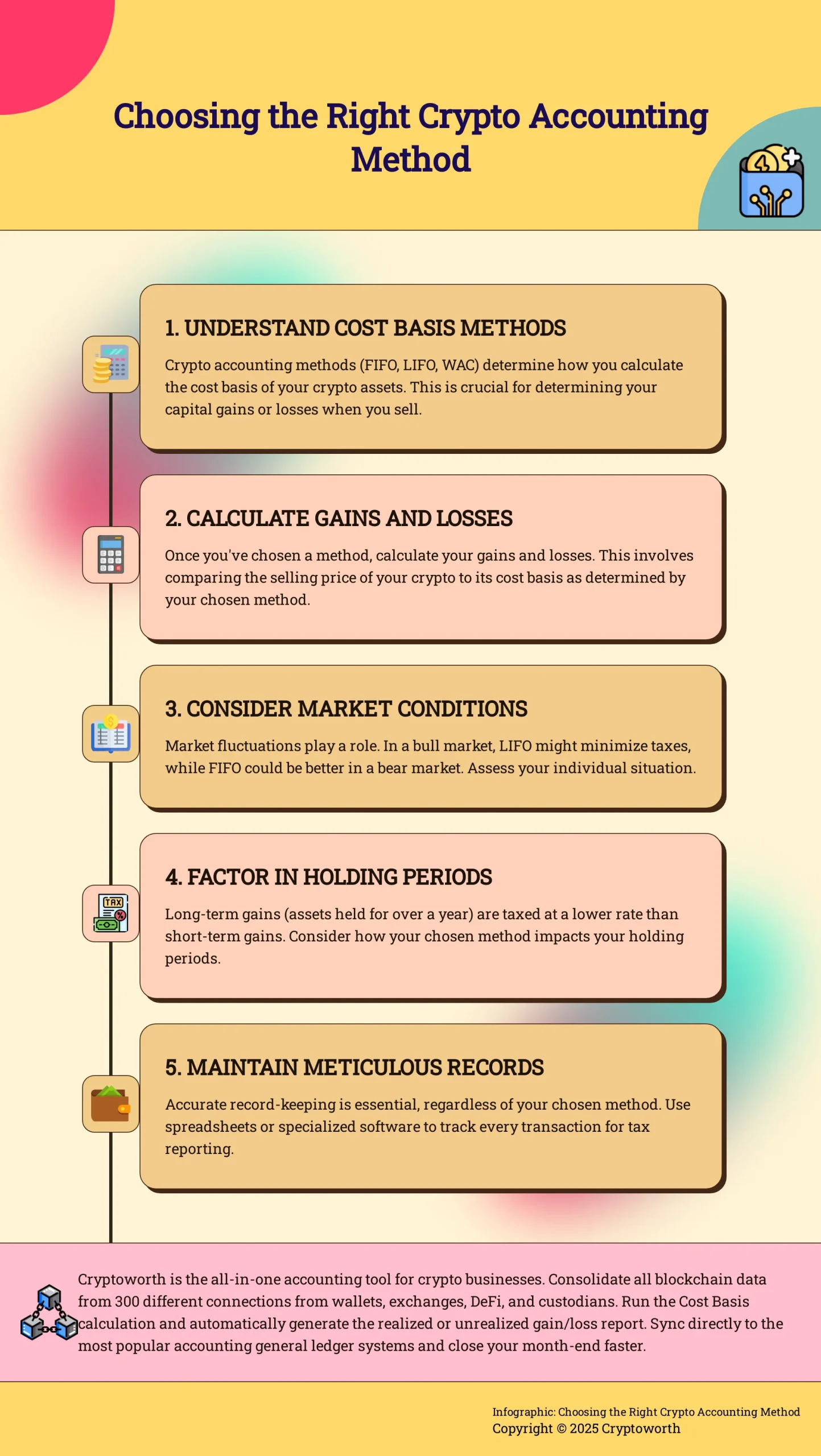
The distinction between short-term and long-term capital gains remains crucial. Short-term gains, realized from assets held one year or less, are taxed at ordinary income tax brackets varying from 10% to 37%. In contrast, assets held for longer than one year qualify for more favorable long-term capital gains rates of 0%, 15%, or 20%, depending on overall taxable income. Planning trades around these holding periods can yield significant tax efficiencies.
Furthermore, digital asset categorization complicates tax treatment as certain NFTs and collectibles may attract a higher tax rate of 28% on long-term gains. Meanwhile, income from mining activities or staking rewards is taxed as ordinary income at the fair market value upon receipt, introducing another layer of tax complexity for active crypto participants.
Current IRS Reporting and Compliance Enhancements
Starting in 2025, brokers managing digital assets are required to issue Form 1099-DA in compliance with the Infrastructure Investment and Jobs Act. This document reports gross proceeds of crypto transactions directly to both taxpayers and the IRS, harmonizing digital asset reporting with traditional securities frameworks. Such mandates substantially increase the IRS’s visibility into crypto transactions, limiting underreporting risks and emphasizing the importance of comprehensive record keeping on the taxpayer’s side.
The expanded definition of “broker” includes centralized exchanges, payment processors, hosted wallet providers, and even real estate entities accepting cryptocurrencies, effectively broadening the reporting net. Interestingly, legislative changes have exempted decentralized finance (DeFi) platforms from certain reporting obligations, but centralized platforms remain fully accountable.
To comply effectively, investors increasingly turn to tax preparation software such as CryptoTrader.Tax and BearTax, which support automatic importation and classification of transactions, greatly reducing manual calculation errors and enhancing audit readiness.
Strategies to Optimize Tax Liability on Crypto Gains
Effective management of cryptocurrency tax liability involves more than simple reporting; it requires sophisticated planning. One of the most impactful strategies is managing the timing of disposals to capitalize on preferential long-term capital gains rates. Investors who hold assets beyond the one-year threshold can substantially reduce taxable income, especially those in higher tax brackets.
Another critical tool is tax loss harvesting. Unlike traditional securities, crypto assets currently fall outside the wash sale rule, allowing investors to realize losses on digital assets and immediately repurchase identical holdings without delay. This facilitates offsetting gains and minimizing tax burdens throughout the tax year.
Legal entity structuring, such as creating LLCs or partnerships for trading activities, offers additional avenues for tax efficiency and liability protection, though these require professional advisory consultation. Incorporating comprehensive tracking mechanisms with platforms like CoinLedger or Accointing ensures investors maintain audit-ready records that comply with the granular requirements of the IRS.
Practical Insights into Crypto Taxable Events
Taxable events encompass various types of transactions, including selling crypto for fiat currency, exchanging one cryptocurrency for another, and using digital currency to purchase goods or services. Each event triggers a taxable gain or loss based on the difference between the asset’s cost basis and its fair market value at the transaction date.
More intricate activities like liquidity provision in DeFi, margin trading settlements, and NFT trading also fall under taxable events, sometimes requiring nuanced interpretation of IRS guidelines. Routine internal transfers between wallets do not trigger tax, relieving some record-keeping burdens if properly documented.
For detailed insights into swapping digital currencies and optimizing tax positions, comprehensive resources such as this guide on tax implications of swapping cryptocurrencies prove invaluable for investors seeking to navigate complex scenarios with confidence.