As cryptocurrencies become increasingly mainstream, understanding how they are taxed in France has never been more crucial. The French tax authorities, embodied by the Direction Générale des Finances Publiques (DGFiP), classify cryptocurrencies not as currency, but as digital movable assets. This distinction carries profound implications for investors and traders regarding their fiscal obligations. Taxable events are typically triggered upon conversion of crypto to fiat currency or when mining profits are realized, but exchanges between cryptocurrencies or transfers between wallets remain non-taxable. The taxation framework distinguishes between occasional investors, who face a flat tax, and professional traders or miners, who are subject to progressive income tax rates under specialized regimes. With evolving regulations and increasing scrutiny from French and EU tax authorities, it is vital for crypto holders to keep detailed records and leverage specialized crypto tax calculators like Koinly, Blockpit, or CoinTracking to ensure compliance and to optimize their tax liabilities.
In brief:
– Crypto assets are treated as movable property, not currency.
– Taxable events occur mainly when converting crypto to fiat or deriving income from mining.
– Occasional investors pay a flat 30% tax, while professional traders fall under the BNC regime with progressive rates.
– Exchanges between cryptos and transfers between personal wallets are tax-free.
– The DGFiP collaborates with EU bodies to track crypto activities through regulated platforms like Coinbase, Binance, Kraken, and Crypto.com.
– Failure to report results in significant penalties.
– Using tax software such as TaxBit, ZenLedger, or Koinly helps automate accurate reporting.
How France Defines and Taxes Cryptocurrencies in 2025
In France, cryptocurrencies fall under the umbrella of digital movable assets, differing from legal tender and thus from traditional currencies. The DGFiP’s stance clarifies that capital gains derived from disposing of these assets are subject to income tax regimes analogous to those applied to stocks or bonds. Importantly, the taxable event is usually understood as converting crypto assets into fiat, such as euros, or when mining activities generate profits. Activities like buying crypto with euros, trading between different cryptos, or transferring assets across wallets do not create taxable events, offering investors breathing room in managing their portfolios. However, the tax regime distinguishes between occasional investors and professional traders, with the former paying a flat tax of 30% known as Prélèvement Forfaitaire Unique (PFU), and the latter taxed on a progressive basis under the Bénéfices Non-Commerciaux (BNC) system.
Capital Gains Calculation Using the PVCT Method
Calculating taxable capital gains on crypto sales in France follows a specific formula known as the “plus values de cessions d’actifs numériques” (PVCT) method. Instead of simply deducting the purchase price from the sale price, this method proportionally allocates acquisition costs relative to the sale value and the overall portfolio. For instance, if you sell a portion of your crypto holdings, the acquisition cost is calculated by multiplying the total portfolio acquisition cost by the ratio of the sale price to the portfolio’s total value. This nuanced approach can be complex, but tools like CoinTracking and Blockpit integrate this calculation method to help users generate accurate records. Ignoring proper acquisition costs may lead to overpaying taxes, as the tax law assumes zero acquisition costs in such cases, eliminating deductions that could lower your taxable gains.
Distinguishing Occasional Investors from Professional Traders
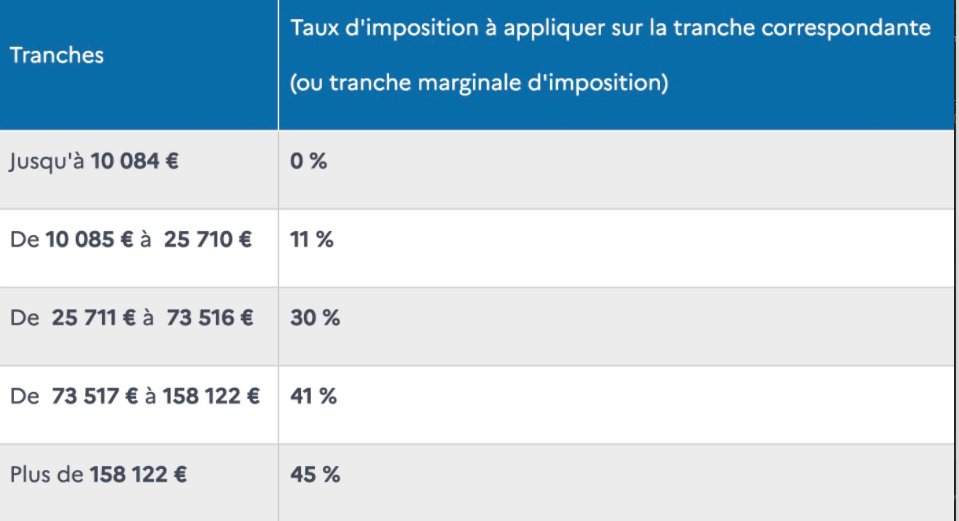
The French tax code historically differentiated between occasional and professional crypto traders based on transaction frequency, volume, and investment scale. Occasional investors benefit from a flat 30% PFU tax on capital gains exceeding €305 annually, regardless of trading frequency. Professional traders, defined by the nature and intensity of their trading activity, pay income tax under the BNC regime, with progressive rates reaching up to 45%. Since 2023, however, the DGFiP’s criteria have evolved—trading volume or frequency no longer solely determine trader status. Now, only those demonstrating activities akin to professional trading, such as using sophisticated tools and conducting numerous complex transactions, are classified as professionals. Others fall under the occasional investor category by default. This regulation shift streamlines the tax process for most investors but still maintains stringent tax obligations for active professional traders.
How the DGFiP Tracks Crypto Holdings and Transactions
Contrary to the misconception that crypto trades occur in anonymity, the DGFiP, supported by EU regulations like the Anti-Money Laundering Directive and DAC8, employs data sharing agreements with regulated exchanges including Binance, Crypto.com, Coinbase, and Kraken. These platforms must adhere to strict Know Your Customer (KYC) and reporting obligations, enabling French authorities to detect crypto asset ownership and activities. In addition, the new EU-wide Market in Crypto Assets (MiCA) regulation enhances regulatory oversight for crypto service providers. Consequently, investors should assume their transactions are monitored, underscoring the importance of precise and complete tax reporting to avoid penalties.
Filing Your Crypto Taxes: Forms and Deadlines
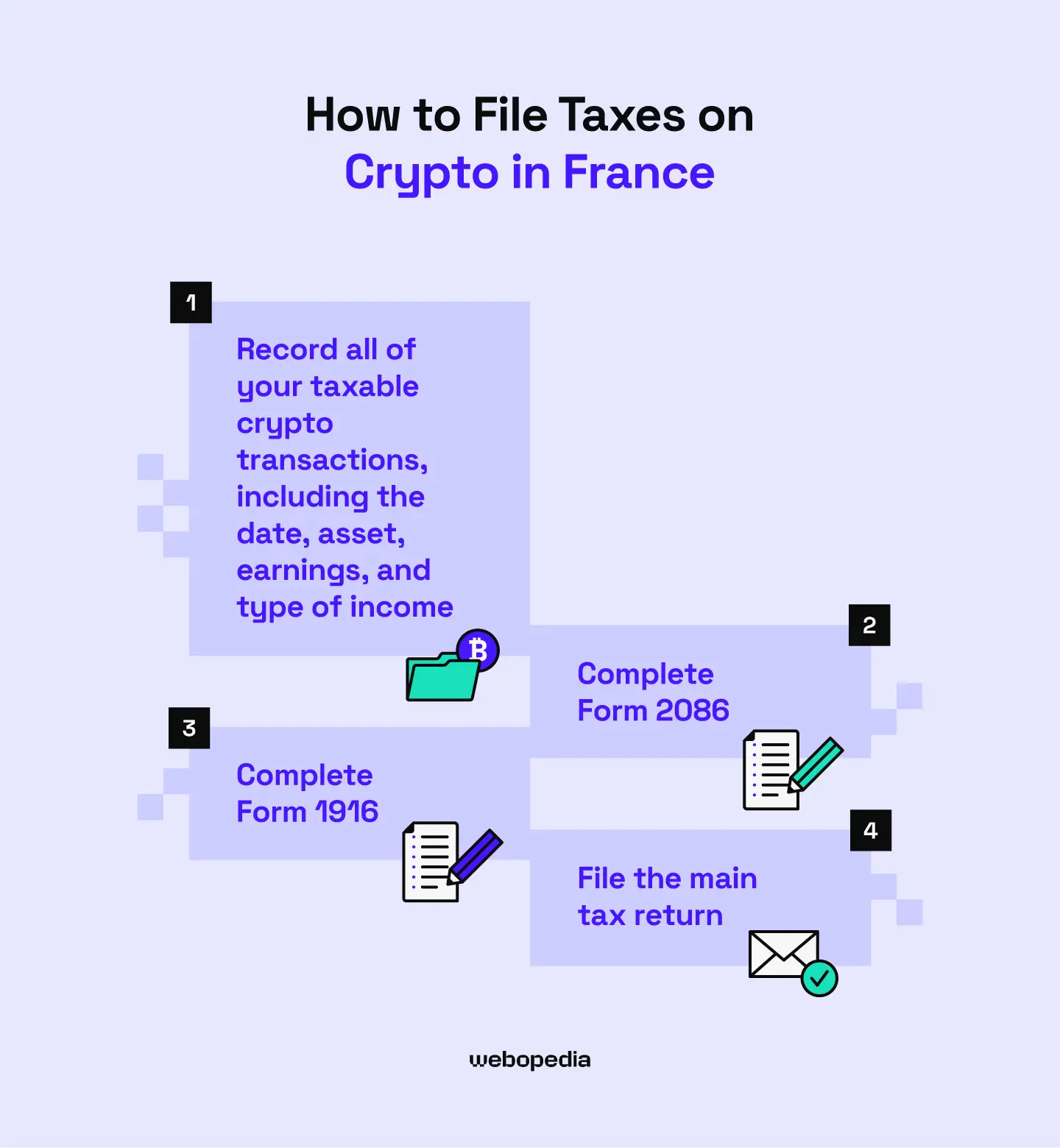
Taxpayers in France must declare crypto capital gains and income within their annual income tax returns (Déclaration des Revenus). The primary form for overall income declaration is Formulaire 2042. For crypto-specific disclosures, annex forms such as 2086 (capital gains summary), 2042 C (non-commercial profits including mining), and 3916-bis (foreign crypto accounts) are also required. Notably, Form 2086 has a transaction limit, but solutions offered by TaxBit or ZenLedger allow seamless aggregation beyond this. Reporting deadlines vary by region, with electronic submissions due as late as early June. Using platforms compliant with French tax rules and linking crypto wallets to software like Ledger or Koinly can significantly simplify preparation and submission, ensuring adherence to compliance requirements.
Effective Strategies to Optimize Crypto Taxation
To legally minimize tax liability, strategies such as holding (‘HODL’) crypto assets instead of immediate conversion to fiat can defer taxable events. Additionally, converting volatile cryptocurrencies into stablecoins, which are generally not regarded as fiat, can decrease taxable incidents as taxes only trigger upon conversion to government-issued currencies. Harvesting capital losses against gains within the same tax year reduces the tax base, although unlike stock market losses, crypto losses cannot be carried forward to future years. Also, keeping precise transaction records, including trading fees deductible as expenses, enhances deductions. Leveraging crypto tax management tools like Blockpit or CoinTracking offers real-time portfolio oversight, enabling investors to time disposals advantageously and remain within tax allowances.